01 / BRIEF
Set the intent
Choose the scale, danger, source books, tone, and any set pieces the evening requires. Party CER keeps encounters sized to your delvers.
Give it a session brief, or just a seed. A deterministic, DFRPG-grounded generator lays out the place, keys every room, and exports it for your table — with optional local AI to interpret your brief and dress the result.
Free early-access builds (0.1.x) · Windows, macOS & Linux · optional local AI built in · no account, no cloud — your prep stays on your machine
DOA handles the spatial work, content passes, and export plumbing. The judgment calls stay yours, because they only make sense with your players in the room.
Choose the scale, danger, source books, tone, and any set pieces the evening requires. Party CER keeps encounters sized to your delvers.
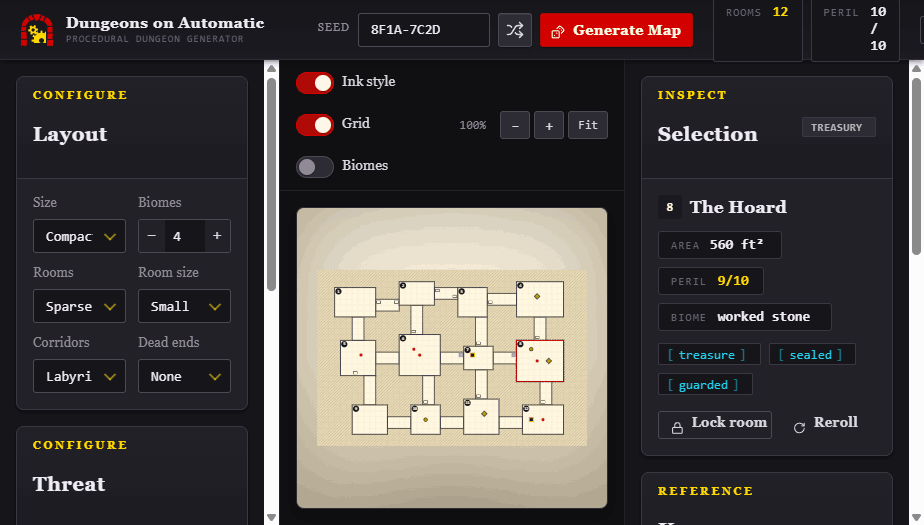
Biomes, organic zones, and room geometry become a connected dungeon from one deterministic seed. Same seed and settings, same dungeon.
Read the adventure frame and room key. Check exits, CER, hazards, treasure, and hidden routes. Reroll the parts that miss.
Send players the clean map. Keep the secrets, procedures, encounter notes, and treasure to yourself.
DOA’s directors run on a local model — the app can download one and run it on its bundled llama.cpp runtime, or connect to the Ollama, LM Studio, or llama.cpp server you already have. They interpret your brief and improve the narrative, but every action travels through a typed tool the generator understands. No model, no problem: the deterministic generator runs fine without one.
Your party and library set the facts: CER, owned source books, DFRPG data, tone, tags, and requested set pieces.
Local AI turns the brief into intent: loose notes become structured suggestions and director actions.
Deterministic systems do the physical work: partitions, zones, rooms, connections, encounters, treasure, and player-safe visibility.
Validators get the last word: they reject impossible geometry, broken references, and disallowed mutations before the result reaches the dungeon.
DOA tracks each room’s purpose, connections, inhabitants, contents, and visibility alongside the map geometry.
One-foot cells preserve wall thickness and room detail; a one-yard hex overlay keeps the finished map useful at the table.
Adventure framing, room descriptions, encounters, hazards, treasure, and dungeon procedures remain attached to the place they belong.
Player exports omit hidden connections, GM notes, encounters, treasure, and the adventure frame.
Export GM and player PNGs, Foundry VTT scenes, Universal VTT files, Markdown room keys, placement TSV, and the complete dungeon state.
The monster library also installs directly into Foundry VTT as a compendium of 457 ready-to-drag Actors.
Every monster in the public library carries a complete GURPS stat block, an original portrait, a top-down token, a hex token cut to its real footprint, and GCS files that work outside DOA. It feeds the generator’s encounters — and it runs in your browser, no download, no account.
Keep the topology you approved while revising the encounters, treasure, or dressing that still needs work.
Repeat a result exactly. Keep the same seed and configuration when you need the same dungeon bones again.
Change the offending part. Encounter and dressing rerolls preserve the approved topology.
Use the books on your shelf. Enable the DFRPG and GURPS sources you own before the next generation pass.
Polish is optional. One click downloads a small model onto the bundled runtime, or point DOA at Ollama, LM Studio, or llama.cpp. Deterministic code still owns the dungeon state.
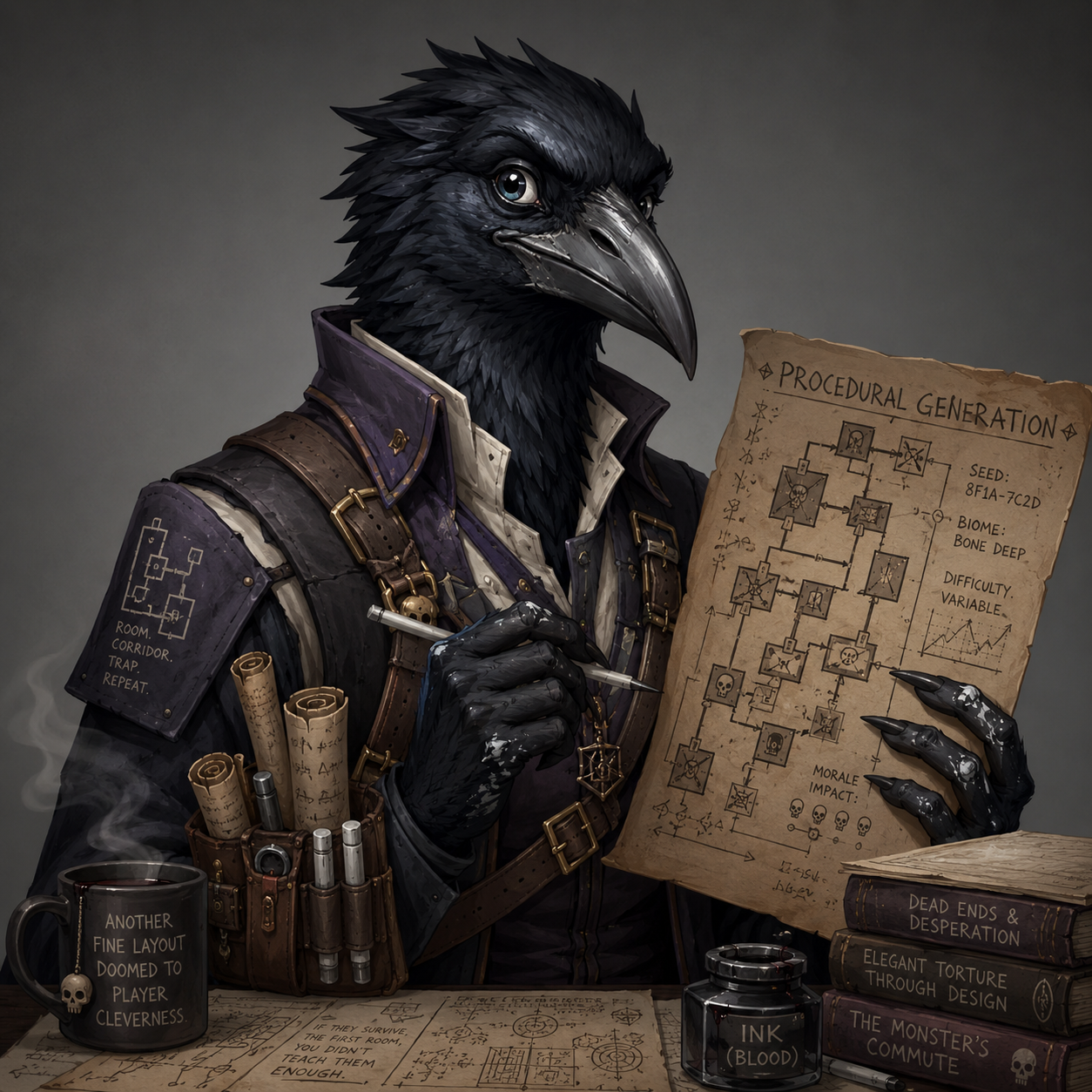
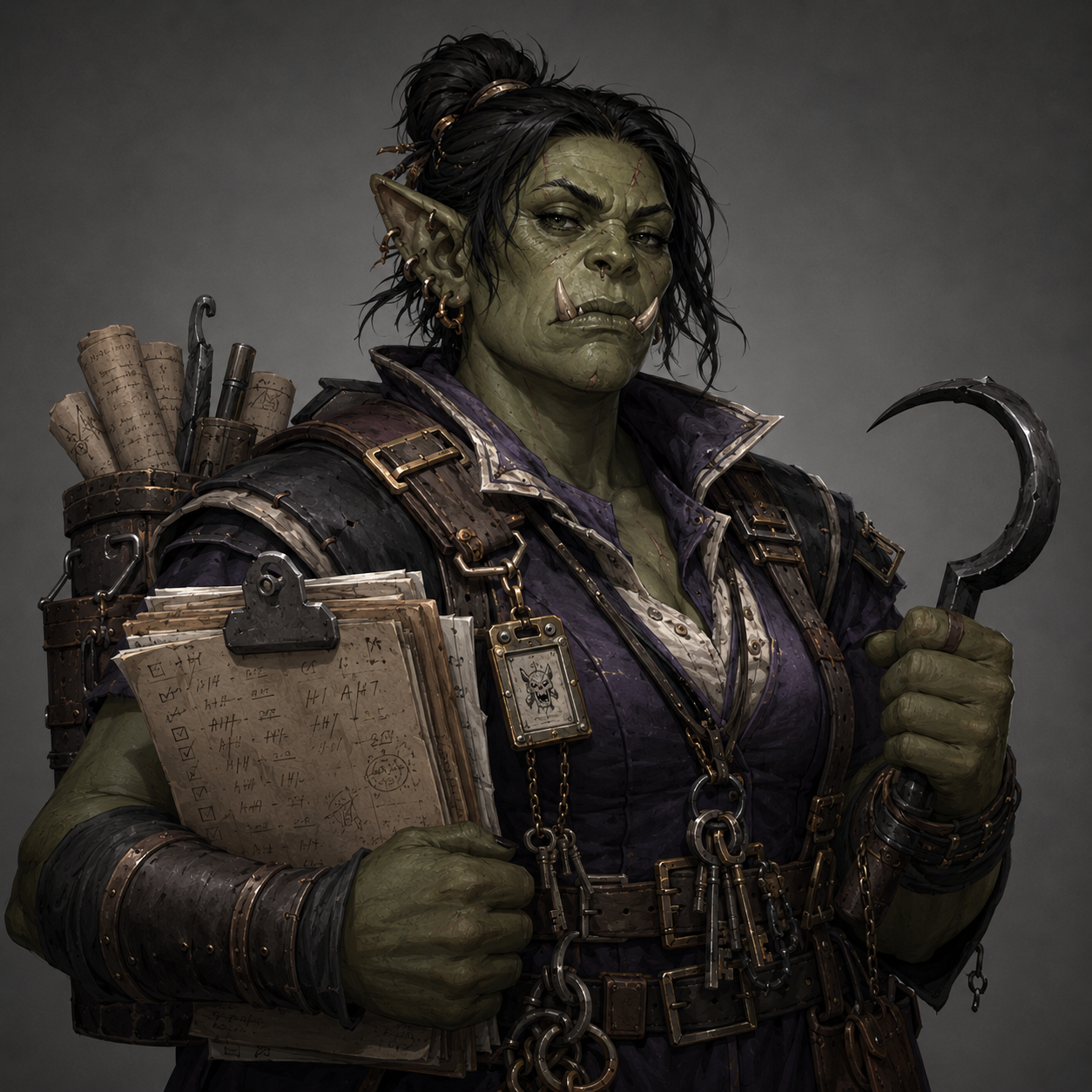
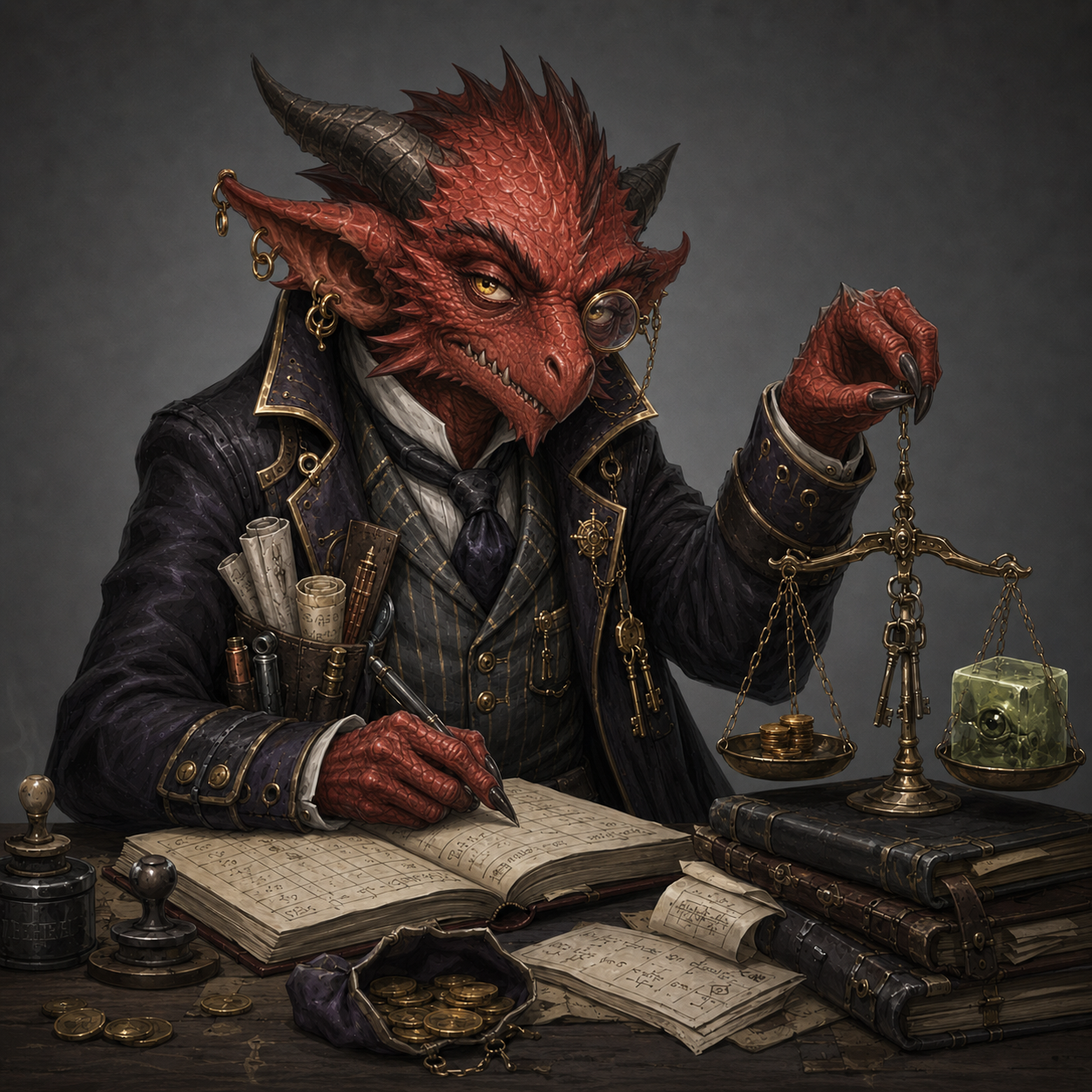
Version 0.1.x ships every platform, generates real dungeons, and has rough edges we list honestly on the known issues page. When something misbehaves, a bug report with the seed is the most useful thing you can hand us.
Dungeons on Automatic is an original game aid by Kyle Norton for use with GURPS and Dungeon Fantasy Roleplaying Game from Steve Jackson Games. It is not official and is not endorsed by Steve Jackson Games.
GURPS and Dungeon Fantasy Roleplaying Game are trademarks or registered trademarks of Steve Jackson Games. All rights are reserved by Steve Jackson Games. This free, non-resale game aid uses those marks under the SJ Games Online Policy; no SJ Games art, logos, or trade dress are hosted here.